
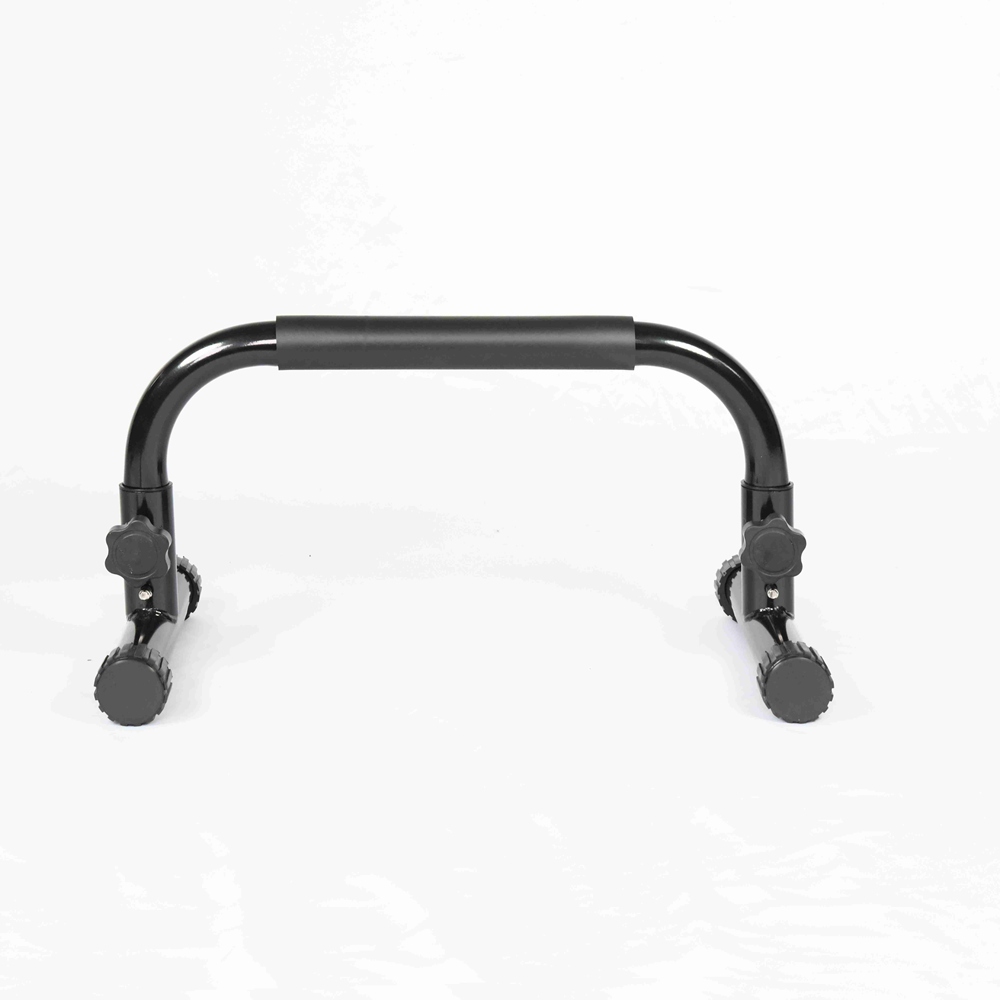
A sample acknowledgement for a pin-type frame needs an identified configuration and an explicit scope. First ask whether the supplier actually offers a physical sample-confirmation checkpoint for the proposed order. Only then request the sample revision, whole-frame or expressly included loose-component coverage and named subjects of the acknowledgement. A catalogue image does not establish a sample service or a safety result.
Identify the offered frame configuration
Use the exact historical pin-type black push-up-frame identity and request the supplier’s offered version for the enquiry. Keep the buyer’s proposed configuration separate from the supplier-confirmed reference. A product name does not establish an included component list, pin quantity, delivery state or readiness for a sample arrangement.
If an earlier sample reference exists, preserve the configuration and revision it actually names. Ask whether it applies to the current offer before connecting its acknowledgement to another version. A similar photographed frame does not establish that every physical or document reference continues unchanged for a later proposal.
Establish that the checkpoint is offered
Ask whether a physical sample-confirmation checkpoint is actually offered for the identified order proposal. Keep sample not offered separate from checkpoint unconfirmed. An explicit negative response and an unanswered question are different evidence states; neither should become a claim about the availability of a future service or arrangement.
The product page does not create a sample offer or a commitment to supply one. Retain the supplier’s actual wording and applicable reference. A buyer’s request is useful correspondence context, but it does not establish that the supplier has accepted the proposed checkpoint or agreed what a future acknowledgement would cover.
Identify the actual sample and supply state
If the checkpoint is offered, request the sample and configuration revision it concerns. Keep sample not supplied separate from sample not offered. An offered arrangement does not establish that its sample exists in the buyer’s records, and a sample reference does not establish that confirmation has been recorded.
Retain any actual sample identifier or supply-state reference provided by the supplier. This is an evidence-linking task, not an instruction to inspect, assemble, adjust, load or exercise a frame. The record does not ask the buyer to create a physical result as a substitute for the supplier’s missing scope statement.
Separate whole-frame and loose-component coverage
Ask the supplier whether the checkpoint concerns the whole frame, expressly included loose components or another identified supply scope. Preserve its literal description and version. Do not derive a component inventory or pin quantity from the product photograph, a general parts label or a sample heading that does not identify them.
If a sample is named but its component coverage remains unclear, retain that omission. A useful identity reference can coexist with an unresolved supply boundary. The next enquiry can ask what the declaration includes without inventing a detachable arrangement, assembly state or relationship between photographed items to complete the record.
Name acknowledgement subjects explicitly
Request which attributes or document revisions the supplier says the proposed acknowledgement covers. Keep those subjects attributable and version-specific. A general word such as approved should not become evidence that every characteristic has been considered or that an unmentioned configuration belongs within the scope of the response.
For example, a reply may identify a document reference while leaving other requested subjects unanswered. Preserve that narrow confirmation and the omitted fields separately. The task does not evaluate pin retention, strength, load capability, safety or conformity; it records the subjects the supplier expressly associates with the proposed checkpoint.
Keep confirmation and agreement states distinct
Request the actual acknowledgement reference and the scope attributed to it. Keep acknowledgement not recorded separate from scope not agreed. The first concerns a missing response; the second preserves an unresolved boundary even where an identifiable sample or message exists. Neither should be hidden beneath a broad sample-approved status.
An acknowledgement does not by itself establish bulk-lot acceptance, waive a defect or create a legal right. It is also not permission to assemble or exercise the product. Keep those conclusions outside the record rather than treating a commercial label as qualification of the frame or its supplied components.
Use a sample-confirmation register
Field | Supplier evidence requested | Boundary retained
Frame offer | Exact configuration and version | Requested version stays separate
Checkpoint | Explicit physical sample-confirmation offer | Unconfirmed is not available
Sample identity | Actual reference and supply state | Offered is not supplied
Covered scope | Whole frame and expressly named loose items | No component inventory is inferred
Acknowledgement | Named subjects, document revisions and response | Safety and bulk acceptance are not added
Add the supplier respondent and response revision beside each entry. Another buyer should be able to trace the record to the sample and configuration it actually concerns. The register organises correspondence; it does not establish a sampling method, inspection result, load qualification, conformity standard or a promised sample service.
Manage changes and outstanding questions
If the proposed configuration, sample or document version changes, ask which earlier acknowledgement remains applicable. Preserve both references and the supplier’s answer linking them. An unchanged product name does not establish that the old scope transfers automatically, while a new file label does not explain its own effect.
The next question may concern an unoffered checkpoint, an unsupplied sample, an unrecorded acknowledgement or an unresolved covered item. Those gaps require different answers. Keeping them separate supports procurement communication without importing assembly guidance, an inspection procedure or an assumed product-performance conclusion into the sample record.
Frequently asked questions
Does the pin-type-frame page establish an available sample checkpoint?
No. It identifies the historical product for the enquiry. Ask the supplier whether the physical checkpoint is actually offered for the named configuration and proposal. The catalogue image does not establish sample availability, a supplied sample, component coverage or the scope of an acknowledgement requested by the buyer.
Can a sample heading establish the loose-component inventory?
Only the supplier’s explicit scope can identify what is included. Request the whole-frame and named loose-component references, leaving unprovided details unresolved. Do not derive a pin quantity, detachable construction or assembly state from a photograph or treat a broad sample label as an itemised supply declaration.
What if the sample is supplied but no acknowledgement is recorded?
Preserve the sample identity and supplied state, then separately record acknowledgement not recorded. Supply does not establish a response or an agreed scope. The next enquiry can identify that missing confirmation without changing the evidence already provided about the sample and its configuration reference.
Does sample approval establish safe retention or bulk acceptance?
No such conclusion should be inferred from the label alone. Record the actual response and expressly stated coverage. This task supplies no safety, load or conformity qualification, bulk-lot acceptance, defect waiver or legal entitlement, and it does not authorise assembly, adjustment or exercise with the frame.
Product reference
Use the historical pin-type-frame identity when requesting the supplier’s actual checkpoint and configuration-specific acknowledgement scope.
https://prdsports.com/product/new-steel-pipe-pin-type-black-push-up-frame/
Provide the confirmed configuration, sample and document references, then identify the unprovided offer, supply, acknowledgement or scope field for the supplier’s response.
https://prdsports.com/contact/
Further product-related procurement records can be found in the article index.
https://prdsports.com/blog/