
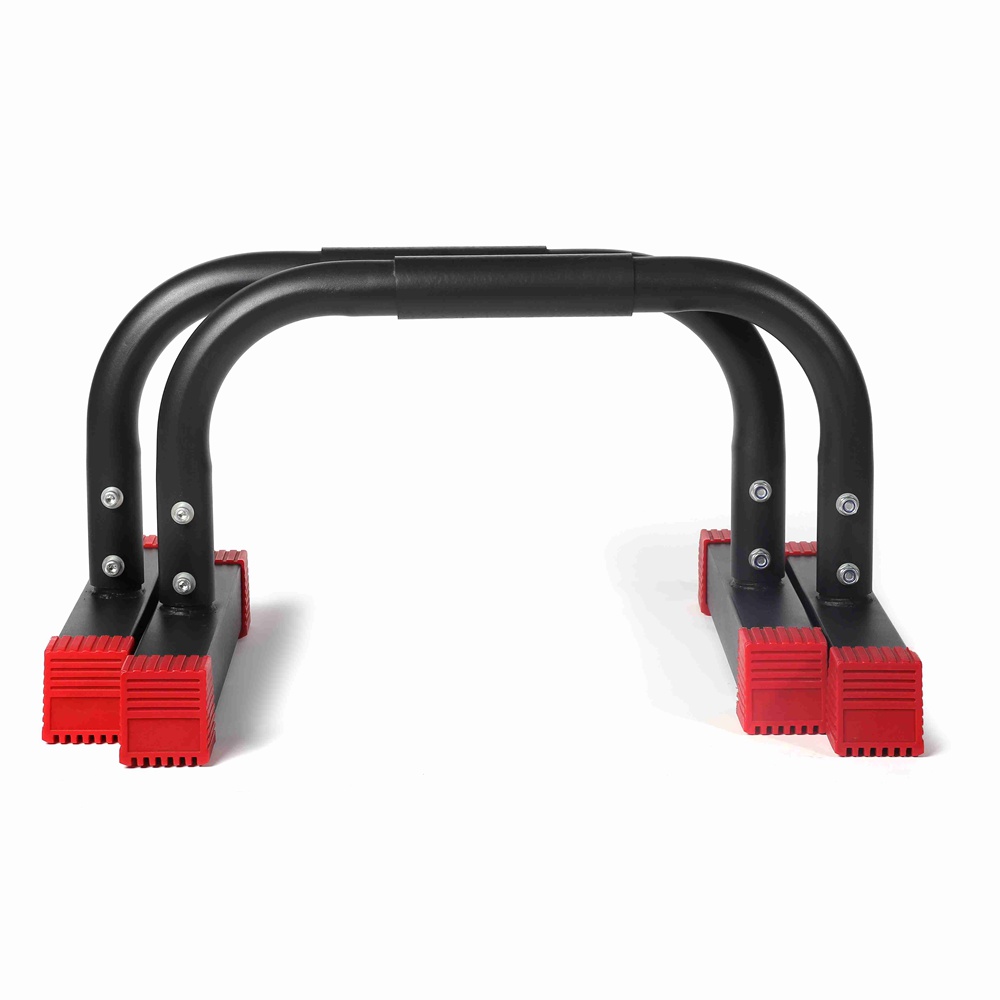
Define a red-cover frame photo set by identifying the exact complete-frame offer and mapping each requested view to an actual supplier-returned file. Keep missing details, uncertain model relationships and unresolved use permission visible. A catalogue picture of a whole frame does not establish separately supplied foot covers or additional image services. The buyer’s useful output is a traceable view index, separate from spare-part availability, packing drawings or technical performance approval.
Start with the complete-frame reference
PRD’s historical official page identifies a square-tube push-up frame configuration with red foot covers. The 38mm wording remains a catalogue name fragment, not a measured fit result. The reviewed image depicts the complete configuration; it does not confirm that an individual red cover is sold separately. Use the supplier’s actual offered version as the subject of the file request.
Earlier foot-cover work asks whether an individual replacement is offered. The pending packing task requests a layout drawing. This task controls returned photo files and the questions they answer. A requested cover detail should not be treated as an offer of a spare, evidence of a packing arrangement or confirmation of how a component performs.
Describe each requested view by its purpose
State which whole-product or detail question the buyer needs clarified and which offer the view must represent. Keep a requested role distinct from a supplied file. Do not describe an unseen underside, separate cover or close-up as available because the product page shows the complete frame. Ask what files exist and what the supplier says they show.
A file request does not establish photography, retouching or content-delivery services. If a view is not supplied, retain that outcome. Do not fill the role with another frame or a loose-cover picture whose relationship to the current offer has not been established. An incomplete but identified set is preferable to a comprehensive-looking gallery with uncertain subjects.
Use an offer-to-view file index
Record field | Actual information to retain | Question that remains open
Offered subject | Exact red-cover frame and version | Which configuration the files must identify
Requested role | Whole-product or detail question | What is requested rather than delivered
Returned file | Original filename and stated revision | Which file can actually be reviewed
Visible subject | Item or area identified by the supplier | What is covered and what is unseen
Offer relationship | Attributed link to the proposal | Whether product correspondence is confirmed
Exception | Missing view or mismatched detail | Which clarification remains pending
Disposition | Accepted file set and withheld roles | What the buyer actually reviewed
The index provides no dimensions, cover specifications or standard photo package. Populate it from actual files and responses. Retain original filenames alongside any buyer tracking names. A descriptive rename should not conceal another product identity or turn a historical example into a confirmed view of the current configuration.
Keep the whole frame and individual component distinct
A close view may help locate a cover without establishing its separate sale, construction or compatibility. Ask which part the supplier identifies and what role the file serves. Do not treat a pictured loose item as a promised replacement simply because it resembles the cover on the complete frame.
Likewise, an overall frame image may confirm the subject of the discussion while leaving a detail question unanswered. Record that limited role. A crop or enlarged copy of the same picture does not become a new independent view of an unseen area, and more visible detail does not automatically establish technical properties.
Do not use photos as measurement or performance records
The catalogue identifier does not supply measured fit, and the image does not verify floor grip, material performance or a safety result. Keep any actual drawing, declaration or report as distinct evidence with its own scope. Do not derive dimensions or technical conclusions from perspective or a familiar product description.
This article provides no exercise, fitting, installation, removal, replacement or testing procedure. A buyer can identify a visual question without directing someone to manipulate or use the equipment. The manifest controls file identities and coverage; it is not a technical instruction or an evaluated performance record.
Resolve mismatched files explicitly
Suppose the supplier returns a file with another model reference while the quotation names the red-cover configuration. Preserve both identities and ask whether the image is an example, an earlier version or a relevant view of the offer. Do not remove the reference or rename the product to make the set appear consistent.
If one file addresses only part of a requested role, retain its useful contribution and the remaining gap. Repeating it against several questions does not establish separate delivered views. A partial answer should not be promoted to a complete set or described as a failed product test.
Separate the view set from packing evidence
A product presentation does not show how an offer is commercially packed. Paired displays and scene objects are not a supply list, package count or transport result. Keep the pending layout request separate instead of treating a new product file as an approved packing drawing.
If a supplier provides another document alongside the image, identify its actual role and scope. Do not merge it into one general approval merely because the files arrived together. The view index should show what each image represents, while packing or commercial decisions retain their own evidence references.
Preserve file revisions and use questions
Receiving an image is different from permission for every publication or edit. Retain the actual response about the intended use, or keep that question unresolved. Do not invent a licence or an additional service. Product correspondence and use permission can require separate answers for the same file.
When a replacement arrives, identify the file or role it supersedes and preserve the earlier set as history. Name the actual files accepted for the stated purpose and keep missing views beside them. This creates a useful purchasing handover without claiming new photography, full-resolution provenance, spare-cover availability or a complete inspection.
Frequently asked questions
Does the whole-frame image establish separate red-cover supply?
No. It identifies a complete configuration. Separate spare availability needs an actual offer, and a requested detail view should not be treated as that commercial commitment.
Can the 38mm catalogue wording be used as a measured fit result?
No such measured result is supplied here. Keep the name as an identity reference and any technical values within their own applicable evidence. The image perspective does not establish fit or compatibility.
Does a returned detail photo verify floor grip or material performance?
No. It may locate a visible area without providing a test result or technical approval. Keep drawings, declarations and reports separate, and do not infer safety or performance from appearance.
What if only some requested views are supplied?
Retain the actual files and the questions each addresses, then identify missing roles. A limited accepted set is useful without being called complete. Do not turn missing imagery into a product failure.
Send an exact-configuration view enquiry
Use the red-cover frame page with the offered version and visual questions requiring clarification. Ask which files are available and what each represents. Keep blog context separate from the actual index, supplier response and limited decision.
https://prdsports.com/product/38mm-square-tube-push-up-set-with-red-foot-cover/
https://prdsports.com/contact/
https://prdsports.com/blog/