
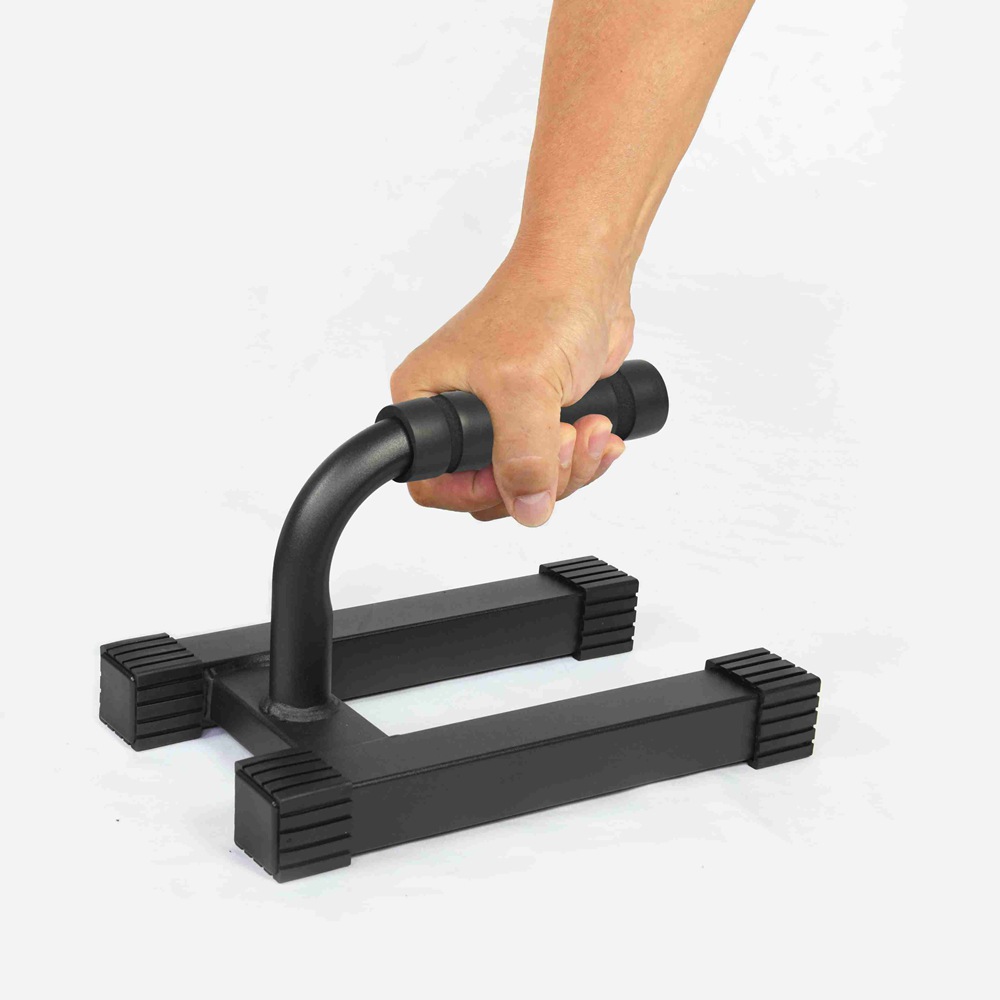
H-Frame Grip Hardness: Request the Declared Basis
For an H-frame enquiry, first confirm that a grip covering is actually offered. Only if the supplier states a hardness value should the buyer request its component, area, scale or method reference, specimen scope, and evidence revision. A sleeve photograph, material name, or fixed-versus-removable declaration does not establish hardness or a tested result.
The buyer’s immediate decision is whether the supplier’s statement has an attributable basis that can be recorded without adding assumptions. A bare hardness figure can look complete while leaving its subject or reference unexplained. Preserve that limitation rather than treating the number as a whole-product property, a comfort judgement, or a purchasing recommendation.
Identify the H-frame and actual covering offer
Use the H-shaped push-up-frame catalogue reference to anchor the enquiry. Catalogue steel-pipe wording remains an attributed product identity rather than independent proof of every component’s composition. Add the supplier’s actual offer and version references when provided, and ask which grip covering, if any, the statement concerns.
A named sleeve or grip surface needs an attributable relationship to the selected offer. Keep a covering supplied, excluded, or unconfirmed as actually stated. If no covering is declared, do not create a hardness subject from the photograph. A visual boundary can identify the region of a question but cannot establish a distinct component or its material.
Separate the hardness question from supply and attachment
A component-supply declaration identifies what the offer contains. A fixed-versus-removable statement concerns the supplier’s description of a component relationship. Neither provides a hardness value or its evidence basis. Keep those records separate even when they concern the same named grip area and arrive in a shared supplier message.
Likewise, a material name does not fill the hardness field. The buyer should not select a likely value, scale, or method based on a familiar material category. Ask whether the supplier actually provides a hardness declaration for the named component, and retain no-declared-value or unconfirmed states when the response does not supply one.
Establish what the declared value describes
If a hardness value is provided, request the supplier-named component or area to which it applies. A declaration may concern a particular covering region, a referenced specimen, or another expressly stated scope. Record that subject literally. Do not extend a limited statement to every grip region, the whole frame, or another offered version.
Ask for the scale or method reference the supplier associates with its value. Retain the actual wording and identifier when supplied. A missing reference should remain missing rather than being completed with a familiar scale name. Do not convert the value, rank it against another unexplained figure, or introduce an acceptance threshold that the correspondence has not established.
Keep specimen and offer applicability visible
Request the evidence or specimen scope if the supplier provides one, including the component identity and any applicable record revision. A statement about a referenced material or specimen should not automatically become a result for every delivered grip or the complete H-frame. Ask how the supplier relates that evidence to the exact offered component.
If a document is provided, retain its issuer and revision and the supplier’s statement of applicability. Do not treat the existence of a document as a verified test result or assume that it covers the selected offer. The useful purchasing record distinguishes the supplier’s declaration from the evidence subject and keeps an unmatched relationship open for clarification.
Use a hardness-basis enquiry record
Record field | Supplier evidence requested | Boundary to retain
Offer identity | Exact H-frame version and reference | No transfer to another configuration
Covering applicability | Actual offered covering and named area | No component inferred from appearance
Declaration status | Hardness value provided or missing | No assumed value or scale
Basis reference | Supplier scale or method wording | No conversion or threshold recommendation
Evidence scope | Named specimen, issuer, and revision if supplied | No automatic whole-product result
Disposition | Attributed basis recorded or clarification pending | No comfort or performance approval
The table is an enquiry index, not a material specification or testing plan. Its fields do not establish a grip covering, composition, hardness, or a completed test. A blank evidence field means information has not been supplied or linked. It should not become a failed test, a zero value, or an assumed refusal when the record is copied elsewhere.
Resolve a realistic quotation gap
For example, a supplier may identify the H-frame version and provide a covering description while a separate message mentions hardness without a component reference. Ask which offered area and evidence subject the statement concerns. Until clarified, retain the statement as incomplete rather than assigning it to every part described as a grip.
Another response might name a scale but omit the applicable offer or specimen. Preserve the answered portion and ask for the missing relationship. This avoids discarding useful supplier information while also preventing a familiar technical term from making the entire declaration appear independently substantiated.
Maintain the record across revisions
If the covering reference or offer version changes, ask whether the earlier hardness statement remains applicable. Keep the original declaration and evidence reference with their original scope. An unchanged catalogue title does not establish unchanged component properties, and a revised photograph does not independently confirm a material or production change.
The final disposition can state that the supplier’s hardness basis is recorded for the identified component, that part of the basis is unresolved, or that no value was declared. It does not establish cushioning, comfort, grip behaviour, durability, structural capability, or safety. Supply, attachment, material, and commercial-service questions retain their separate evidence and open fields.
Frequently asked questions
Does a grip material name establish a hardness value?
No. Ask whether the supplier actually declares a value for the named offered component. Do not select a scale or number from a material description or catalogue photograph.
Does a removable-sleeve statement answer the hardness enquiry?
No. Component relationship and hardness basis concern different records. Keep the attachment statement separate and request the actual value and reference only if the supplier declares them.
Can an unexplained value be converted for comparison?
This record should preserve the supplier’s actual statement and its unresolved basis. Request the missing reference rather than creating a conversion, acceptance limit, or recommendation from incomplete information.
Does recording the basis establish a tested performance result?
No. It captures attributable supplier information. It provides no squeezing, cutting, measuring, testing, exercising, loading, removal, fitting, installation, or repair procedure and no comfort or safety assessment.
Request the exact component declaration
Send the H-frame offer identity with the covering, value-status, reference, and evidence-scope questions. Keep any supplied issuer and revision beside unanswered applicability so the purchasing description remains precise and attributable.
https://prdsports.com/product/h-shaped-steel-pipe-push-up-frame/
https://prdsports.com/contact/
https://prdsports.com/blog/