
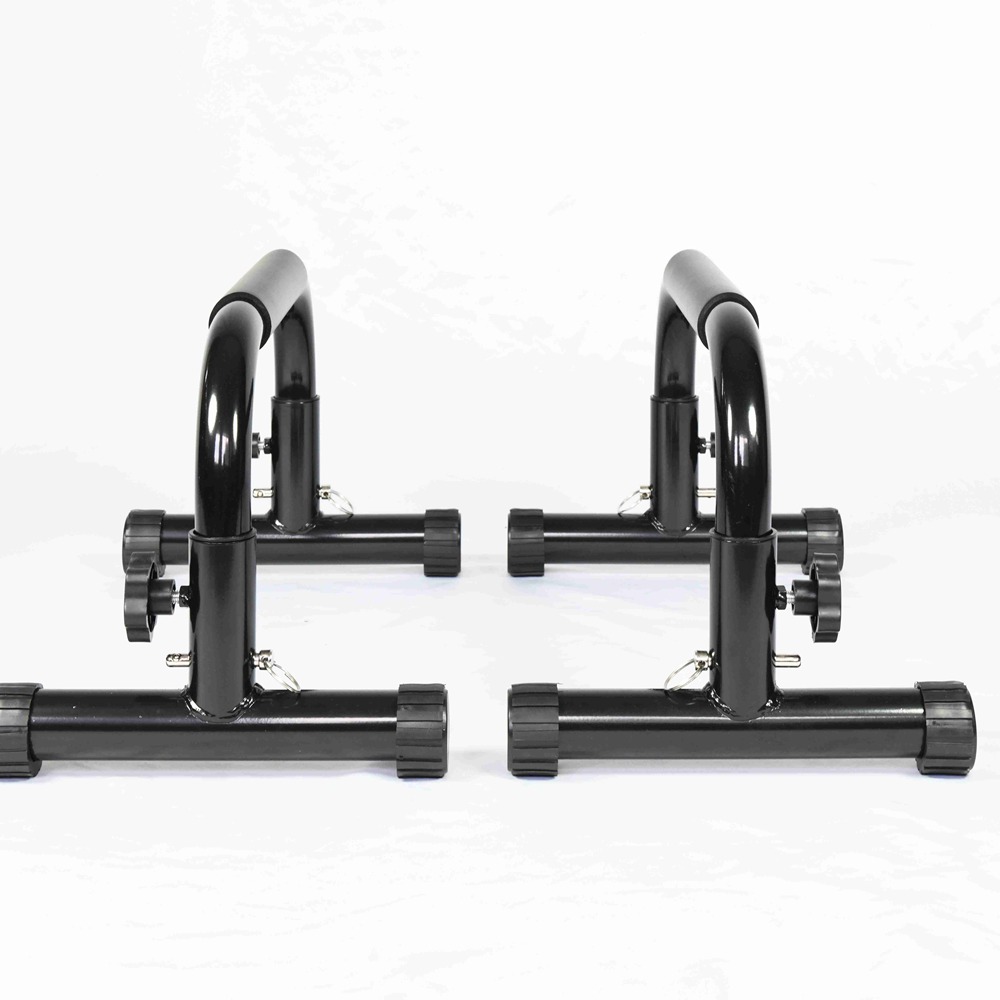
Ask the supplier to map every push-up frame dimension to a named direction and two visible endpoints. A three-number catalogue entry does not establish whether a figure includes end covers, measures the usable grip, or describes an assembled frame. Retain the original unit and sequence, request a marked drawing for the offered model, and keep carton dimensions on a separate record. This creates a usable purchasing reference without converting a product photograph into a measurement.
Copy the triplet before interpreting its order
Pride’s pin-type black push-up frame page lists product dimensions as 49 × 25 × 25 cm. The H-shaped frame lists 25.5 × 15.5 × 15 cm, while the square-tube set with red foot covers lists 57 × 36 × 37 cm. These are the reviewed supplier entries. The page labels alone do not define every measurement direction or endpoint.
Put the exact product name, URL, page revision or observation date, original numbers and stated unit into the worksheet. Keep the sequence as published. A buyer may prefer length, width and height columns, but should not assign those names to the three figures until the supplier identifies the intended orientation. Different models can require different drawings.
• Retain the supplier’s original numerical sequence and unit.
• Name the exact offered model and photograph reference.
• Request directions and endpoints before filling interpretation columns.
Request one orientation view and an endpoint key
Ask for a drawing or marked photograph showing a clear front, side and top orientation where needed for the purchasing question. Each requested dimension should have a reference letter and two defined endpoints. The drawing can then be read consistently by the buyer, supplier and receiving team without relying on phrases such as the long side or the front edge.
Use the actual offered configuration in the request. The presence of knobs or pins in a catalogue photograph does not establish adjustment positions, an assembly method or an adjustable dimension. If the supplier proposes alternative positions or versions, request a separate documented scope for those positions rather than treating an unmarked image as confirmation.
Requested field
Endpoint question
Do not substitute
Overall base span
Are outer end covers included?
The visible cropped width in a photograph
Overall height
From which base plane to which upper point?
Usable grip clearance
Grip length
Which exposed or covered grip endpoints apply?
The complete frame’s length
Packed dimensions
What packed object and packing level are measured?
An assembled product triplet
Separate overall height from grip-related dimensions
A purchasing team may need an overall envelope for product records and a separately defined grip dimension for its specification review. Those fields answer different questions. Ask the supplier to identify the measurement surface and whether the cover or grip sleeve is included. Leave the value unanswered until the corresponding definition has been supplied.
Do not use an apparent gap beneath a handle to calculate clearance from the catalogue photograph. Perspective, cropping and the absence of a scale make that inference unreliable. This sheet requests dimensional evidence; it does not provide exercise advice, establish user suitability or demonstrate a permitted operating position.
Give end covers an explicit boundary
The catalogue views show different frame and end-cover arrangements. A dimension might describe the tube or the completed outer envelope, and those terms should not be silently interchanged. Ask the supplier whether its stated product dimensions include the fitted end covers, grip coverings and any projecting components of the offered configuration.
Where the boundary matters, add a small detail reference to the drawing request. Identify the part and the relevant faces, rather than guessing a missing dimension from another product’s listed size. The 38mm wording in a separate square-tube product title should not be reused as an internal opening, wall thickness or compatible spare-part dimension.
Keep the carton record separate
The pin-type page separately lists carton dimensions of 51 × 27 × 10 cm. Retain that entry as carton information and ask which packed configuration it covers. Do not conclude how the frame is disassembled, folded or nested simply because the carton triplet differs from the product triplet.
Request clarification if a logistics worksheet needs a confirmed outer pack size. Keep its confirmation date and packing reference distinct from the product drawing revision. A dimensional enquiry does not establish a carton quantity, packing method or a shipping quotation, and it should not be used to fill those unrelated fields automatically.
Create a receiving measurement record
After a sample and the supplier’s dimension definition are available, the receiving team can record its own observations against the agreed endpoints. Identify the sample, drawing revision, measurement method and the observed value separately. A record of an observation is different from a declaration that the entire production lot meets a requirement.
If acceptance limits are required, the responsible parties need to agree on them for the actual purchasing purpose. Do not invent a tolerance or label an undefined difference acceptable. Retain unresolved endpoints and unanswered limits as open fields so that the next reviewer can see exactly what evidence remains missing.
Freeze the accepted definition with the order reference
Keep the agreed drawing and endpoint key linked to the quotation and sample reference. A change to a cover, grip arrangement or frame configuration can require a review of the relevant dimension definition. Ask which fields are affected instead of carrying the previous drawing across to a visibly similar alternative.
Send the original triplet and the marked-up questions through Pride contact. Keep the Pride product blog as background reading, while using the model-specific response for purchasing records. The completed sheet should make each direction understandable; it does not certify load capacity, safety, material performance or suitability for a particular exercise.
Frequently asked questions
Can the first number automatically be labelled length?
Retain the published order and ask the supplier to identify the direction. A buyer’s preferred spreadsheet convention does not establish the supplier’s intended sequence.
Do overall dimensions define grip height or clearance?
Not by themselves. Name the exact endpoints and ask for a separate dimension where the purchasing question requires one.
Can the photograph be scaled using a known dimension?
This guide does not measure catalogue photographs. Request a marked, model-specific drawing or other suitable dimensional information from the supplier.
Does a smaller carton imply that the frame folds?
No. Ask what packed configuration the carton entry describes. Different product and carton figures do not establish an assembly or folding method.
Product and contact references
https://prdsports.com/product/new-steel-pipe-pin-type-black-push-up-frame/
https://prdsports.com/contact/
https://prdsports.com/blog/